Funding issues for drug repurposing relate to lack of funding, the existence of funding gaps and financial disincentives/market failure in certain scenarios. There is a need for innovative funding models to address these issues and that can complement the traditional modes of funding for drug development. A range of innovative models already exist or have been proposed, but the knowledge of these is dispersed and not easily accessible to the community. In this report we aim to develop awareness of the need for innovative funding models for drug repurposing. We have collated and categorised a range of innovative funding models that were found through peer- and grey-literature reviews and through stakeholder interviews. We have made the information accessible to the repurposing community as a resource to encourage adoption and adaptation of these models for drug repurposing.
Funding models
CROWDFUNDING
Collecting donations from the public, often through online platforms, to fund specific projects.
READ MORETAX BENEFITS
Utilising the taxation system to reduce the costs associated with clinical research in repurposing, e.g. tax credits (reduction in tax liabilities) or tax deductions (reductions in taxable income).
READ MOREREWARD- OR PRIZE-BASED MODELS
A pull-incentive using post-approval or milestone payments to develop drugs in areas which lack a traditional business case to fund clinical development.
READ MOREPAY FOR SUCCESS MODELS
A model in which an outcome payer, such as a government body or insurer, pledges to repay investors their initial capital plus a return only if the drug achieves the specified outcomes.
READ MOREPARTICIPANT-FUNDED RESEARCH
A rich individual funds a trial and takes part in the trial themselves nominates another person (e.g. a family member or friend) to take part.
READ MOREINNOVATION SURCHARGE
Adds a small surcharge to each generic drug prescription and uses the revenues raised to fund repurposing studies of generic drugs.
READ MOREPUBLIC-PRIVATE PARTNERSHIPS
Public funding matched by private funding, e.g. from industry, venture capital or philanthropic funders.
READ MOREVOUCHER SCHEMES
Creates a voucher, e.g. for priority regulatory review or longer data exclusivity, awarded upon approval of a drug for a specified disease or condition that can be used for a subsequent product or can be sold to others.
READ MOREFOREWORD
All drug development is risky – at every stage of the process the failures outnumber the successes, and the attrition rate has remained high despite advances in technology and our understanding of biology. However, the rewards for successful development can be very high and the promise of a return on investment is a key factor in driving progress in the pharmaceutical industry. Funding models can be considered mechanisms that mobilize or allocate financial resources, reduce the costs and risks of development, or increase the expected financial return from successful development. The current funding models for drug development typically combine public and philanthropic funding for basic research, often provided through grants, with venture capital investments that support early-stage biotechnology companies. As development progresses into costly late-stage clinical trials and commercialization, funding is generally provided by pharmaceutical companies. The financial ecosystem of pharmaceutical R&D | SiRM (2022)
However, there are also a number of areas where the standard business model for drug development is not a good fit – leading to market failures or financial disincentives that make development more difficult. Notable examples include neglected diseases, anti-microbial resistance, paediatric medicines, ultra-rare diseases and drug repurposing in general. This is not to say that commercial development is not possible in these areas of medicine, rather that the traditional model of funding and investment leads to inefficiencies, low levels of funding and a more difficult path to success and market- and patient-access.
In the area of drug repurposing the barriers to success have been extensively researched (Petykó et al. 2025), including issues relevant to funding models. These include, but are not limited to:
- Generic medicines repurposing, for example faces difficulties in generating a return on investment due to (low) generic pricing models being applied to repurposed off-patent medicines. There are also ‘free rider’ issues when there are multiple marketing authorisation holders for a repurposed product. A company making the investment required for a new indication or marketing authorisation cannot guarantee that competitor products will not be prescribed for the new indication (cross-label prescribing) – risking little or no return on their investment. A full list of all funding-related barriers can be found in Petykó et al. 2025. Alternatively, this creates an incentive to diverge to an exclusivity position that in turn jeopardizes the very core promise of drug repurposing of more affordable therapies than traditional “innovative” treatments.
- The funding landscape in repurposing is fragmented and leads to funding gaps that slow progress or, in some cases, stop it completely (REMEDI4ALL Funders Network, 2026). In the absence of commercial funding streams, the journey from candidate adoption to clinical validation and final approval often requires multiple funders. Success at one stage of the journey may stall in the absence of funding for the next stage, leading to delay or abandonment of promising leads.
- Regulatory issues, including IP, and drug approval issues for generic medicines being repurposed. Additionally, many academic investigators, who are important parts of the drug repurposing development ecosystem, may lack relevant expertise or experience in regulatory matters. Together these factors may have indirect impacts on funding for repurposing as the route to approval and market access is uncertain in comparison to commercially led drug development.
These and other issues highlight the need to look beyond traditional investment and funding models to assess alternative, innovative pathways that may be more suitable vehicles for delivering successful repurposing programs. In this paper we outline a number of funding models that have been proposed as suitable complements to the traditional funding models. Not all have been implemented to date, but they address relevant issues and are worthy of further consideration by repurposing funders, philanthropists and investors.
Deciding on which funding models are ‘innovative’ and which are ‘traditional’ is by definition a subjective task. Aside from a lack of formal definitions, there are of course blurred edges even when models can be well-defined. Our approach has been based on a simple heuristic – models which cannot be neatly categorised as ‘traditional’ are therefore candidates to be categorised as ‘innovative’. By traditional we refer to classic grant-funding mechanisms (independent of the type of granting body), standard public-private-partnerships, government-backed loans, revolving funds and so on. Outside of these there are a range of possibilities, and we therefore included models which were explicitly designed to incentivise drug repurposing research and development by increasing the availability of funding, either via push (derisk development via reduced costs) or pull (incentivise by increasing returns for successful development) mechanisms. (DNDi, 2010; Matthey et al 2024).
Previous work has explored some of these innovative funding models, most notably Verbaanderd et al. 2021. Obviously, if systemic changes to the current reimbursement landscape would yield a more predictable business case for drug repurposing (as proposed in response to the repurposing of colchicine; de Visser et al. 2024), the funding landscape would respond accordingly. Our report has a different scope and explores a wider range of models within the current reimbursement landscape. Where Verbaanderd et al. focused on the funding of clinical trials, we focus on drug repurposing across the development lifecycle, including pre-clinical and post-trial development. We also look at a broader range of models, including voucher schemes, tax benefits and so on, whereas Verbaanderd et al. explored four areas – grant-funding, crowdfunding, public-private-partnerships and social impact bonds/pay for success models. Finally, the repurposing landscape has advanced in the five years since the latter paper, and the additional models reflect more recent developments. Note that the funding models described in this report are not intended as replacements to the existing funding models used by philanthropic, public or private funders. For example, philanthropic fundraising, whether aimed at the general public or at high net-worth donors, is the standard model that generates funds for grants to projects or individual researchers, including those working in repurposing. The funding models we focus on are intended as complements that can address the need to plug funding gaps, increase the amount of funding for repurposing or reduce associated costs for repurposing so that existing funding streams can have greater impact.
Pan Pantziarka & Heleen van der Meer, August 2026
METHODS
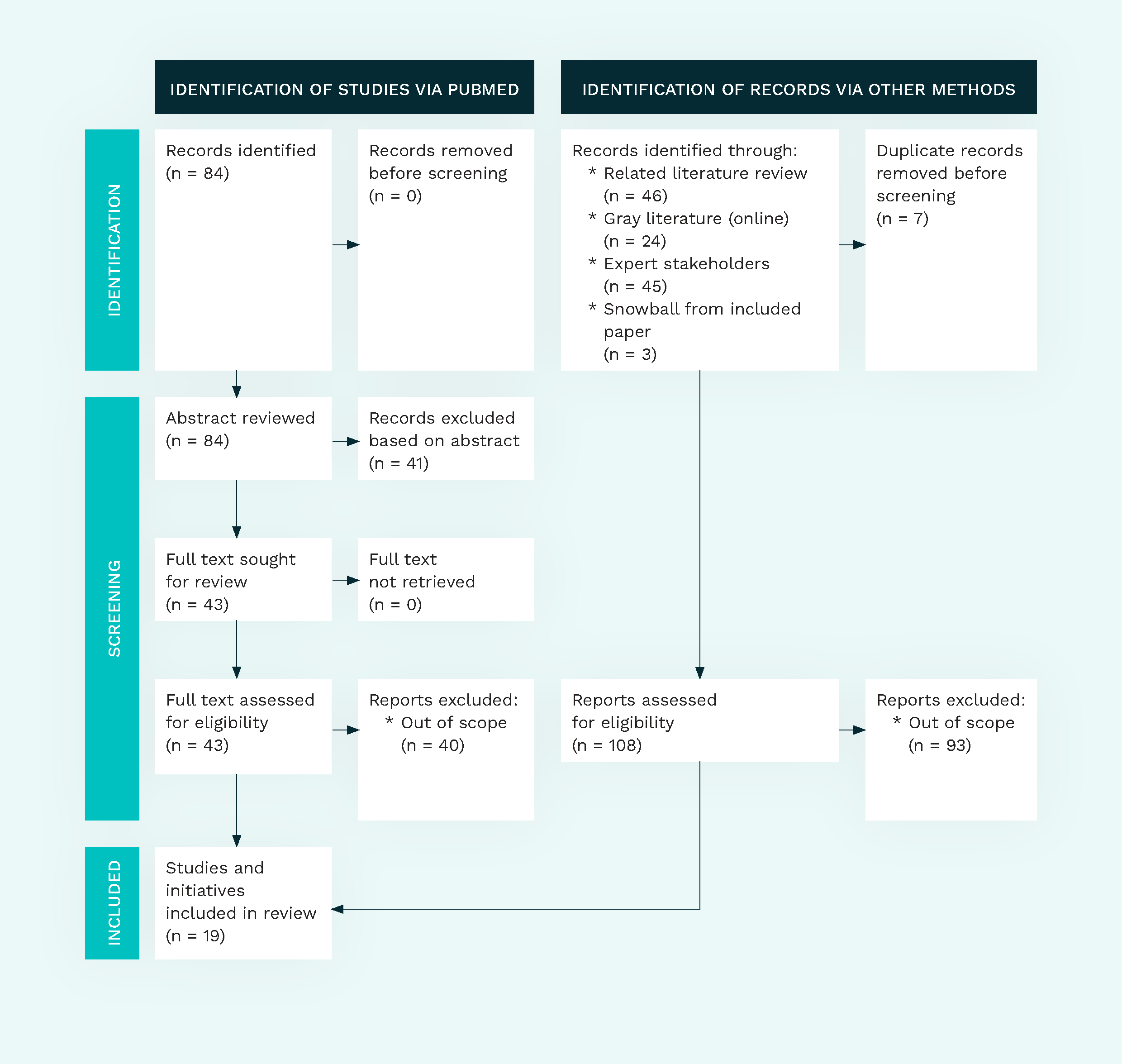
A narrative review approach was adopted, using a combination of backward and forward snowball searches to develop a corpus for review and analysis. The starting point was a collection of references previously identified by the authors in connection with other research in this area [here we can reference the SLR and other R4ALL activities]. This was supplemented by a Pubmed search using the terms:
(“funding model”[All Fields] OR “funding mechanism”[All Fields] OR
“business model”[All Fields]) AND (“Drug Development”[MeSH] OR
“Drug Discovery”[MeSH] OR “Drug Industry”[MeSH] OR
“pharmaceutical innovation”[All Fields] OR
“medicine development”[All Fields] OR
“orphan drugs”[All Fields] OR
“Drug Repurposing”[All Fields] OR
“Drug Repositioning”[All Fields])
Much discussion of innovative funding models takes place outside of the academic literature in white papers, blog articles, business web sites and other non-peer reviewed sources. These grey literature sources were also explored and any relevant references included in these were also tracked for forward snowball searching.
Finally, an additional source of ideas and suggestions came from discussions with expert stakeholders from the REMEDI4ALL platform and the associated REMEDI4ALL Funders Network.
The review process was performed by three reviewers. The randomly assigned records were first screened by one reviewer who classed the record as yes, no or unclear. For the unclear records a second reviewer made an assessment. Data extracts were taken from each in scope record. All in scope records were consolidated and classification was applied based on the funding model described.
All records for the same classification were grouped. For each classification a summary description was written, referring to the best examples.
DISCUSSION
In this report we have presented a selection of innovative funding models that seek to address gaps in the funding landscape for drug repurposing. As part of our analysis of the field, we have determined that a range of innovative models already exist with different degrees of implementation and success, but that the knowledge of these is dispersed and not easily accessible to the community. We aimed to develop awareness of the need for innovative funding models for drug repurposing and to outline what those might be, or indeed to develop new models if needed. We have collated and categorised a range of innovative funding models that were found through peer- and grey- literature reviews and through stakeholder interviews. The innovative funding models we describe include crowdfunding, tax benefits, reward- or prize-based models, pay for success models, participant-funded research, innovation surcharge, innovative public-private partnerships and voucher schemes.
The innovative models mentioned in the report, including both push- and pull-focused models, are designed to complement the standard funding models that are successfully contributing to the development of repurposed therapies across different disease areas. This includes both philanthropic, venture capitalist and public funding sources. However, as previously highlighted (REMEDI4ALL Funders Network, 2026), these current models can lead to fragmented funding, lack of funding and ultimately market failure. The models we have highlighted, therefore, are intended to address some of these issues.
It is notable that many of these models have yet to be implemented for drug repurposing. Voucher-based systems, for example, have been implemented, and in the case of the FDA PRV, have been successful in addressing the niches they have been designed for. The same kind of system can be implemented specifically to address drug repurposing; there is nothing intrinsically different from addressing the needs of anti-microbial resistance or paediatric drug development. However, the creation of such systems depends very much on regulators being directed by policy makers – meaning that political will is required.
Additionally, a fundamental issue in pay-for-success models is the problem of tracking prescriptions or health-system savings, particularly when cross-label prescribing is the case. REMEDI4ALL has active policy workstreams focusing on issues related to pricing mechanisms for drug repurposing. (Inotai et al., 2025)
Furthermore, it is likely, and indeed desirable, that combinations of models are deployed in order to fully realise the potential value in repurposing. For example, the development of a treatment for an ultra-rare genetic condition may involve traditional grant-funding from public and philanthropic funders, crowdfunding from the general public and a participant-funded n-of-1 clinical trial of a shelved compound or repurposed therapy.
More can also be done within the existing traditional models to improve the funding of drug repurposing development. Addressing inefficiencies through such means as creating joint funding calls, encouraging longitudinal funding and sharing best practices amongst funders is a core function of the REMEDI4ALL Funders Network. More recently the development of the REMEDI4ALL Marketplace has provided groups of funders with a new source of potential project proposals that have undergone a degree of due diligence and quality control that sporadic applications or standard request for application responses do not usually possess.
The further development of the funding models outlined in this paper may well occur within the group work of the Funders Network, collaborating with regulators, payers and other stakeholders who are part of the REMEDI4ALL platform and ecosystem.
REFERENCES
- AMRC. Facilitating adoption of off-patent, repurposed medicines into NHS clinical practice. 2017.
- Augustin Y, Krishna S, Kumar D, Pantziarka P. The wisdom of crowds and the repurposing of artesunate as an anticancer drug. Ecancermedicalscience. 2015 Oct 13;9:ed50. doi: 10.3332/ecancer.2015.ed50. PMID: 26557887; PMCID: PMC4631583.
- Bertolini F, Sukhatme VP, Bouche G. Drug repurposing in oncology–patient and health systems opportunities. Nat Rev Clin Oncol. 2015 Dec;12(12):732-42. doi: 10.1038/nrclinonc.2015.169. Epub 2015 Oct 20. PMID: 26483297.
- Cernuschi T, Furrer E, Schwalbe N, Jones A, Berndt ER, McAdams S. Advance market commitment for pneumococcal vaccines: putting theory into practice. Bull World Health Organ. 2011 Dec 1;89(12):913-8. doi: 10.2471/BLT.11.087700. Epub 2011 Oct 7. PMID: 22271949; PMCID: PMC3260895.
- Crowd Funded Cures | Curing Patients Without Patents. Accessed July 2026.
- Duke Margolis Institute for Health Policy. Drug Repurposing. Available at: https://healthpolicy.duke.edu/projects/drug-repurposing. Accessed July 2026.
- Hafer N, Maidment BW, Hatchett RJ. The NIAID Radiation Countermeasures Program business model. Biosecur Bioterror. 2010 Dec;8(4):357-63. doi: 10.1089/bsp.2010.0041. PMID: 21142762; PMCID: PMC3011992.
- Helena Project to Incentivize Generic Drug Repurposing – Business Insider. Accessed July 2026.
- Langley RE, Vilahur G, Mackenzie M, Burn J. Suspending the NHS medicines repurposing programme in England is a missed opportunity. BMJ. 2025 Jul 2;390:r1309. doi: 10.1136/bmj.r1309. PMID: 40602828.
- Longitude Prize on ALS. Accessed July 2026.Masters A, Nutt D. A Plutocratic Proposal: an ethical way for rich patients to pay for a place on a clinical trial. J Med Ethics. 2017 Nov;43(11):730-736. doi: 10.1136/medethics-2016-104050. Epub 2017 Jun 6. PMID: 28588147; PMCID: PMC5749301.
- Rex JH, Outterson K. Antibiotic reimbursement in a model delinked from sales: a benchmark-based worldwide approach. Lancet Infect Dis. 2016 Apr;16(4):500-5. doi: 10.1016/S1473-3099(15)00500-9. PMID: 27036356.
- Robertson AS. Preserving an Incentive for Global Health R&D: The Priority Review Voucher Secondary Market. Am J Law Med. 2016 May;42(2-3):524-542. doi: 10.1177/0098858816658278. PMID: 29086641.
- Robinson JC. An Innovation Surcharge to Fund the Repurposing of Generic Drugs. JAMA. 2022 Nov 10. doi: 10.1001/jama.2022.21250. Epub ahead of print. PMID: 36355357.Simon, David A. (2022) “Off-Label Innovations,” Georgia Law Review: Vol. 56: No. 2, Article 5.
- The Dental and Pharmaceutical Benefits Agency. Comparative theoretical study of pull incentives for antibiotics development. 2023.
- Thompson R, Potter J, Griffiths A. Using Social Finance to Fund Generic Drug Repurposing for Rare Diseases: A Social Impact Bond Proof of Concept. Value in Health, 19, A505-A506. 2016.
- Towse A, Hoyle CK, Goodall J, Hirsch M, Mestre-Ferrandiz J, Rex JH. Time for a change in how new antibiotics are reimbursed: Development of an insurance framework for funding new antibiotics based on a policy of risk mitigation. Health Policy. 2017 Oct;121(10):1025-1030. doi: 10.1016/j.healthpol.2017.07.011. Epub 2017 Aug 5. PMID: 28888660.
- Verbaanderd C, Rooman I, Huys I. Exploring new uses for existing drugs: innovative mechanisms to fund independent clinical research. Trials. 2021 May 4;22(1):322. doi: 10.1186/s13063-021-05273-x. PMID: 33947441; PMCID: PMC8093905.