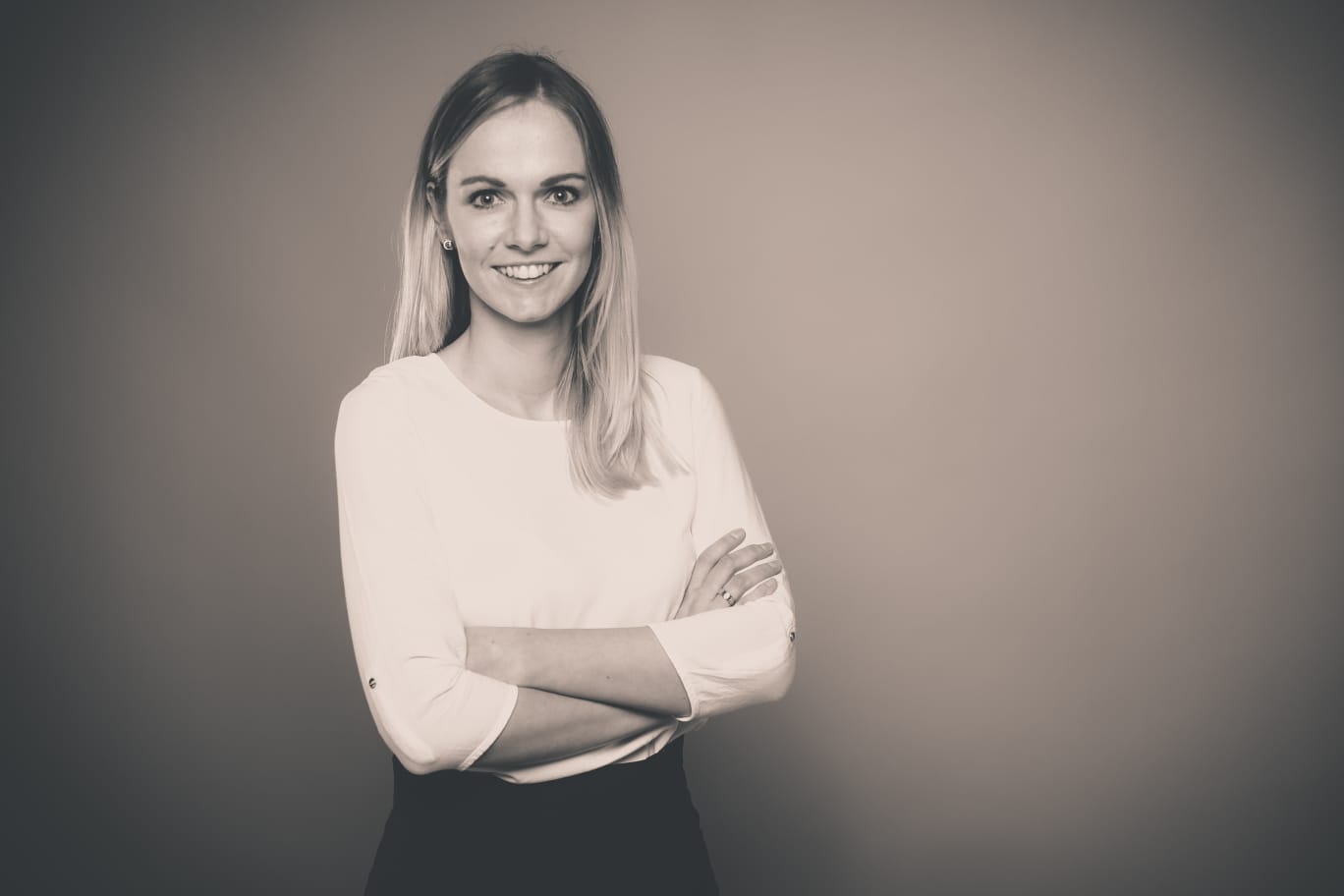
In this series, we talk to early career researchers from REMEDi4ALL institutions to find out more about their interests, projects and how they see the future of drug repurposing. In this edition, we caught up with Maria Kuzikov, Senior Scientist in Assay Development & Screening at the Fraunhofer Institute in Hamburg about all things research, superpowers and alternative careers.
Tell us a bit about yourself.
I am a Senior Scientist in Assay Development & Screening at the Fraunhofer Institute in Hamburg. My work sits at the interface of biochemistry, pathobiology and drug discovery, and focuses on building robust workflows to find and characterize small molecules. Over the past decade I have worked in international, multidisciplinary teams, from academic-style collaborations to translational industry projects, and I greatly enjoy connecting structural biology, disease biology and chemistry to answer therapeutically relevant questions.
What’s your big research question?
My central question is: how can we design experimentally and computationally robust workflows that identify truly disease-relevant small molecules, rather than artefacts of our assays? In practice, this means understanding the biological determinants underlying infection progression and other pathologies, and then building pathophysiological meaningful models that reflect these processes. Ultimately, I want to improve target-based and phenotypic screening so that hits have a much higher chance of translating into clinical benefit.
What sparked your interest in pursuing research in this field?
Very early on, during my Bachelor and Master’s work on antiviral compounds and amyloid-ß interactions, I saw how complex and fragile biological readouts can be. During my PhD on drug repurposing for SARS-CoV-2, the urgency of finding effective therapies but also the risk of false positives became particularly tangible. These experiences convinced me that better experimental design and critical data interpretation are essential if we want to move from attractive hypotheses to treatments that truly help patients. .
What is one thing that you have achieved during your project that you are proud of?
I am proud of having contributed to building and validating sophisticated screening assays and workflows that can be used by many different project teams, not just a single study. One of compounds that was identified in these workflows reached the clinical trial stage. Creating tools and datasets that others can reliably build upon is something I consider a core achievement.
What is one obstacle you have faced in your project so far (and how did you overcome it)
A recurring obstacle has been projects that “fail” in the traditional sense: promising targets that do not validate, or hits that fall apart under more realistic experimental conditions. Rather than viewing these as dead ends, I learned to treat them as source material to refine our models and workflows. Discussing openly with collaborators, revisiting assumptions, and integrating additional technologies (for example, orthogonal assays or computational analyses) has helped turn several apparent failures into valuable methodological advances.
Where do you see your field in 5-10 years’ time?
I expect drug discovery to rely much more on integrated, data-rich workflows that combine advanced cell models, high-content readouts, AI and machine learning. We will better understand assay-specific artefacts and translation obstacles such as phospholipidosis and learn to design around them early. In parallel, I see target-based and phenotypic approaches becoming less separated: mechanistic insights, structural information and systems-level data will increasingly be merged in iterative cycles to prioritise the most credible therapeutic hypotheses.
What is one superpower you wish that you had as a researcher and why?
I would love the ability to instantly see the “true” in vivo consequence of any compound we measure in the lab. This would bridge the most problematic gap in translational research: knowing which beautiful in vitro signals actually matter in patients. Such a superpower would allow us to distinguish, in real time, between biologically meaningful effects and artefacts, and would dramatically accelerate the path from screening hit to real therapeutic value.
If you weren’t a researcher, what other career path might you have chosen?
I could imagine working at the interface of science communication and strategy, for example in scientific consulting or research management, where complex findings are translated into clear, public friendly content and accelerate decisions. Alternatively, I also like the idea working as a teacher, sharing my fascination for molecular life sciences with students and hopefully inspiring the next generation to think critically about data, uncertainty and the way biomedical research can improve patients’ lives. In all cases, I would likely stay close to science and to interdisciplinary collaboration.
Who would be your dream person to work with (dead or alive)?
I’m incredibly fortunate to work with such outstanding people in my team at the Fraunhofer Institute in Hamburg and within the R4All network. Everyone in the team works hard on translating research into real-world impact, brings deep mechanistic insight across disciplines, and actively integrates us into the wider scientific community. I very much value partners who are comfortable questioning their own hypotheses and who see also “negative” data as a route to better science.
Learn more about our REMEDi4ALL partner Fraunhofer Institute’s project outputs including the REMEDi4ALL Expertise Dashboard and a number of publications authored by Maria.